
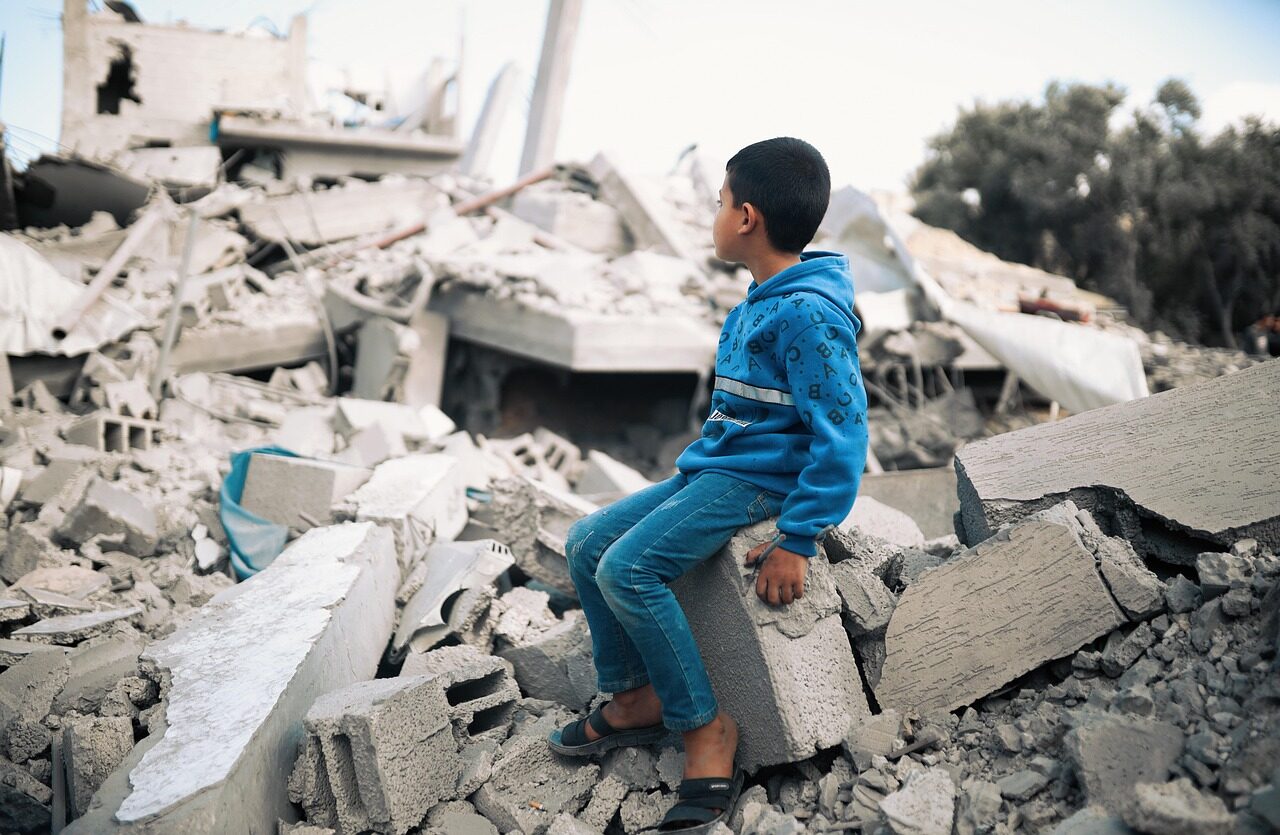
The announcement of Donald Trump’s proposed 20-point peace plan in October 2025 at first seemed to offer the tangible prospect of an end to the ongoing destruction in Gaza, with Hamas signing the agreement on October 9. Complying with the terms of the first phase of the agreement, Hamas returned all of the 20 remaining living Israeli hostages shortly thereafter, which seemed to indicate a path towards the recovery of the remaining deceased hostages, and the commencement of a political process to bring this phase of the war to an end. In contrast to the ceasefires of late 2023 and early 2025, one of the strongest indicators of this new ceasefire’s prospects was President Trump’s assertive influence on its orchestration.
Israel’s prime minister Benjamin Netanyahu has reminded the public that “Israel is a sovereign state,” that “our security policy is in our own hands” and that the country’s relationship with the United States is “a partnership.” But one might venture that Israel’s September 9 strike on Qatar (unsuccessful in assassinating senior Hamas figures gathered there) showed Trump that Israel was beginning to pursue its campaign against Hamas too readily outside coordination with the United States – especially given the airstrike struck America’s “great ally” in the region, and host of the largest US military base in the Middle East. It seems reasonable to suggest that the Doha airstrike, which “broke regional taboos” prompted Trump to intervene authoritatively, restoring American primacy in Israel’s management of the war. But while the ceasefire may be America’s to own, the war remains Israel’s to fight, and its consequences remain Israel’s to bear. This is especially evident in three enduring problems facing Israel, which Trump’s peace plan is unlikely to resolve.
Firstly, as the ceasefire’s prospects dimmed over the course of October, Israel was quick to charge Hamas with bad faith, due to the delayed return of deceased hostages from Gaza. Meanwhile, Israel has resumed heavy strikes in Gaza in response to new attacks by militants whom Hamas has stated are not its members. But whether or not Hamas’ statements about the difficulty of locating deceased hostages are true or are attempts to buy time, the real problem for Israel is that Hamas continues to act as an effective negotiating party. Shortly after Hamas’ 2023 attack, Netanyahu stated that “Calls for a ceasefire are calls for Israel to surrender to Hamas, to surrender to terrorism, to surrender to barbarism. That will not happen.” But having agreed now for the third time to enter into a negotiated ceasefire with an organisation Israel repeatedly vows to eliminate, Israel now faces the problem of how to deal effectively with an adversary which it has not been able to overcome by force. The American president’s more prominent involvement in the latest ceasefire may indicate Trump’s impatience and his desire to claim an effective role in securing Israel’s victory, but it does not provide Israel with new techniques for managing Hamas. At the same time, by resuming disproportionate strikes resulting in yet more civilian deaths, Israel has both discredited its criticism of Hamas’ bad faith, and continued its track record of acting with impunity in Gaza.
Secondly, Hamas’ military intransigence post ceasefire is consistent with the organisation’s long-term aversion to disarmament under American pressure and without real prospects of Palestinian statehood. When Hamas politburo member Mohammed Nazzal states that Hamas will not disarm unless there are “horizons and hope for statehood,” his position is consistent with that held by Hamas after winning the 2006 Palestinian elections, when its leadership refused to accept the demands of the US-led Middle East Quartet to commit to non-violence, recognise Israel, and accept unspecified “previous agreements.” Refusing to disarm at that time resulted in the cessation of international funds to the new Hamas government (rendering it inoperable) and, after clashes between Hamas and Fatah which may have been fomented by Washington, ultimately led to Hamas abandoning government in Ramallah and seizing power in Gaza in 2007. As Nathalie Tocci observed at the time, other than the conditionality on violence, the demands made by the Middle East Quartet in 2006 were legally dubious.
More to the point, the subsequent acceptance of those conditions by the Fatah-led Palestinian Authority has been followed in the next two decades only by reduced prospects of Palestinian statehood, and a decreasingly credible Palestinian Authority. Israel’s occupation of the West Bank has proceeded practically toward annexation, regardless of the status as defined by Israeli legislation. Whether correlated to the ongoing settler violence against Palestinians in the West Bank, or considered in scholarly terms as an overall “one state reality,” the diminution of Palestinian political prospects has been ongoing since the Palestinian Authority agreed to the terms and conditions rejected by Hamas in 2006.
Given Hamas’ refusal to disarm under international pressure in 2006 – when it had demonstrated its electoral legitimacy and was unwilling to accede to the external management of Palestinian politics – it is difficult to see what incentive Hamas has to disarm today, when Israel’s determination to militarily eliminate the movement is absolute. This determination stands alongside Netanyahu’s Greater Israel vision, and his commitment that “There will be no Palestinian state.” Israel may have substantially reduced Hamas’ military capabilities during the past two years of war, but there is no obvious reason why Hamas would complete the process of disarmament voluntarily.
Thirdly, there are the consequences of Hamas’ confinement in Gaza since 2007, which cannot be undone. Rather than the “effective containment” by Israel, which Tareq Baconi considered to have been achieved five years before the attack of 2023, the consequences of apparent containment in Gaza must now be said to include the following: a) Hamas’ ability to prepare for the most concerted challenge to Israel’s state and society in the nation’s history; b) Hamas’ consolidation of the distinctive operational modes which scholars have observed for several decades, from its pragmatic political pluralism, to its combination of “controlled violence” and “calculated participation,” to “engaging the world” in a multi-directional foreign policy; and, c) Hamas’ construction of what John Spencer has suggested (based on recent Israeli estimates) may be up to 700 miles of underground tunnels. The depth and extent of the Gaza tunnel network has come to complement the regional “strategic depth” cultivated by Hamas’ practice of decentralised leadership (located in Gaza and elsewhere). Both depths have increased over the decades of surface-level containment. Consequently, Hamas remains both obdurately present as a resistance movement in Gaza, and effectively elusive as a political organisation outside Gaza.
These three dimensions of difficulty facing Israel do not mean that, after two years at war, Hamas is without problems of its own. But all three dimensions mentioned here will need to be overcome by Israel if Hamas is to be eliminated as a proximate threat, and rendered insignificant as a dispersed but coherent organisation.
The American president’s peace plan may have been effective in instigating the current ceasefire, but Israel’s continued and disproportionate airstrikes after the ceasefire commenced underscore the difficulty faced by Israel in coming to terms with the challenges posed by Hamas, as an organisation that remains active both in Gaza and abroad. However, whether in the form of Hamas or another organisation, it is ultimately not Palestinian resistance movements themselves that constitute Israel’s most fundamental challenge. Israel today stands accused of committing war crimes and crimes against humanity, and its prime minister and former defence minister are wanted by the International Criminal Court. Its occupation of the West Bank, Gaza Strip, and East Jerusalem has perhaps never faced greater international scrutiny, while 2025 has seen a wave of countries newly recognising Palestinian statehood, and new diplomatic efforts to advance a vision for a peaceful settlement of the Israeli–Palestinian conflict.
This critical international attention does not change the fact that American military and diplomatic support for Israel has remained assured and decisive under both the Biden and Trump administrations. But this American support continues in a regional environment which also has its own continuing dynamics, including Iran’s as-yet unknown long-term response to US-Israeli strikes on its nuclear facilities in June, and the prospect of Hezbollah rebuilding its capabilities, after having been severely weakened by Israel in 2024. In this regional environment, diminishing the capacity of Hamas may reduce an immediate security threat to Israel, but it will not address the larger questions surrounding Israel’s policies and legitimacy, that have gained such high international prominence since October 2023.
Image by Hosny Salah from Pixabay
The views expressed in the Near East Policy Forum are those of the authors and do not represent the views of the Near East Policy Forum or any of its partner organisations.