On February 28th, Australia’s Foreign Minister, Penny Wong, flanked by both the Prime Minister and his deputy, announced Australia’s support for the US/ Israel war on Iran. Justifying US actions, Wong cited the need to prevent Iran from obtaining a nuclear weapon, remove its threat to international peace and security, and to stand “with the brave people of Iran in their struggle against oppression.” The statement fell on the same day as the US bomb that killed over a hundred Iranian schoolgirls. More recently on June 15th, Wong released another statement in support of the US-Iran peace deal, claiming that “Australia has long called for de-escalation and an end to the conflict” and urged “restraint” and “constructive engagement.”
These contradicting statements by the Minister, made at the outset of this deadly war and again at this later stage of the war, with its generational global impacts, expose a fundamental flaw in Australian foreign policy. Australia does not have a comprehensive Middle East policy, nor does it correctly weigh the importance of the Middle East for the Asia-Pacific in its decision-making. Australia’s approach to the Middle East compartmentalises it from Asia and is over-delegated to and over-determined by the US-alliance. Australia’s failure to correctly distinguish between its interests and those of the US in February 2026 was a consequence of this long-term failure.
Australian Government officials often defend their inattention to the Middle East with the claim that their focus is on the Asia-Pacific and that their apparent limited influence over affairs within the region. The 2026 Iran War has proven this inattention to be negligent.
First, the war has been the worst possible outcome for Australia’s foreign policy interests in the Asia-Pacific, and its negative effects on Asian prosperity, stability and security will continue to be felt for decades to come. As the war dragged on, the US’s ability to provide security in Asia came under question as its focus and military assets were pivoted to the Middle East. The failure of the US to defend the UAE and Saudi Arabia and other GCC states from damaging strategic Iranian reprisals and to unilaterally reopen the Strait of Hormuz likely further damaged perceptions of US power in Asia. Economically, the restriction of energy exports has been devastating for Australia’s neighbours and will have lasting negative effects on regional growth and development. Domestically, Albanese’s efforts to dampen lingering inflation were also seriously affected, imposing political costs.
Second, Australia has (or had) significant influence over Iran and a successful track record playing a mediatory role between Iran and the US. Until recently, Australia had the strongest bilateral diplomatic and trade relationship with Iran of the Anglosphere. The strategic utility of the relationship was demonstrated by the Abbott Government in 2015 when then-Foreign Minister Julie Bishop visited the country to arrange an intelligence-sharing agreement against ISIS in Syria and Iraq. The agreement positioned Australia as the facilitator of an otherwise-impossible Iran-US intelligence cooperation.
Australia could have reprised that role to have secured a seat alongside Pakistan, Qatar, Saudi Arabia, Turkiye and China in the mediation process in Islamabad. This would have placed Australia in a position of global leadership, benefiting its Asian neighbours and the globe through strengthened efforts to secure a lasting peace and reopen the Strait of Hormuz.
This possibility, already severely weakened over the course of 2025, was rendered impossible by Wong’s February statement. Australia’s relationship with Iran, as well as its Embassy, has been mothballed. It appears Canberra’s priority was to use the war as an opportunity to tell the Americans what they wanted to hear for bilateral purposes. The total reversal of rhetoric of the 15 June statement indicates that it had not anticipated the likely consequences of the war. Australia’s approach locked it out of facilitating the “constructive engagement” it later advocated for once the toll of the war became apparent.
A comprehensive Middle East policy that understands the region’s importance to the Asia-Pacific and Australia’s opportunities for leverage outside of its US alliance would have prevented Wong from falling into the trap of feeding US aggression when restraint was required. As the conflict re-escalates, Australia lacks the option to participate in its resolution. To protect its interests in the stability and security of the Asia-Pacific, Australia needs to rebalance its foreign policy in the Middle East from the current US-alliance service model and build up its capacity to identify and act on its overall interests in the region. This should include restoring a functional diplomatic channel with Iran, despite serious bilateral differences, alongside deeper engagement with other regional states. Such channels would give Australia greater capacity to communicate directly, support international de-escalation efforts and help avert another disastrous war.
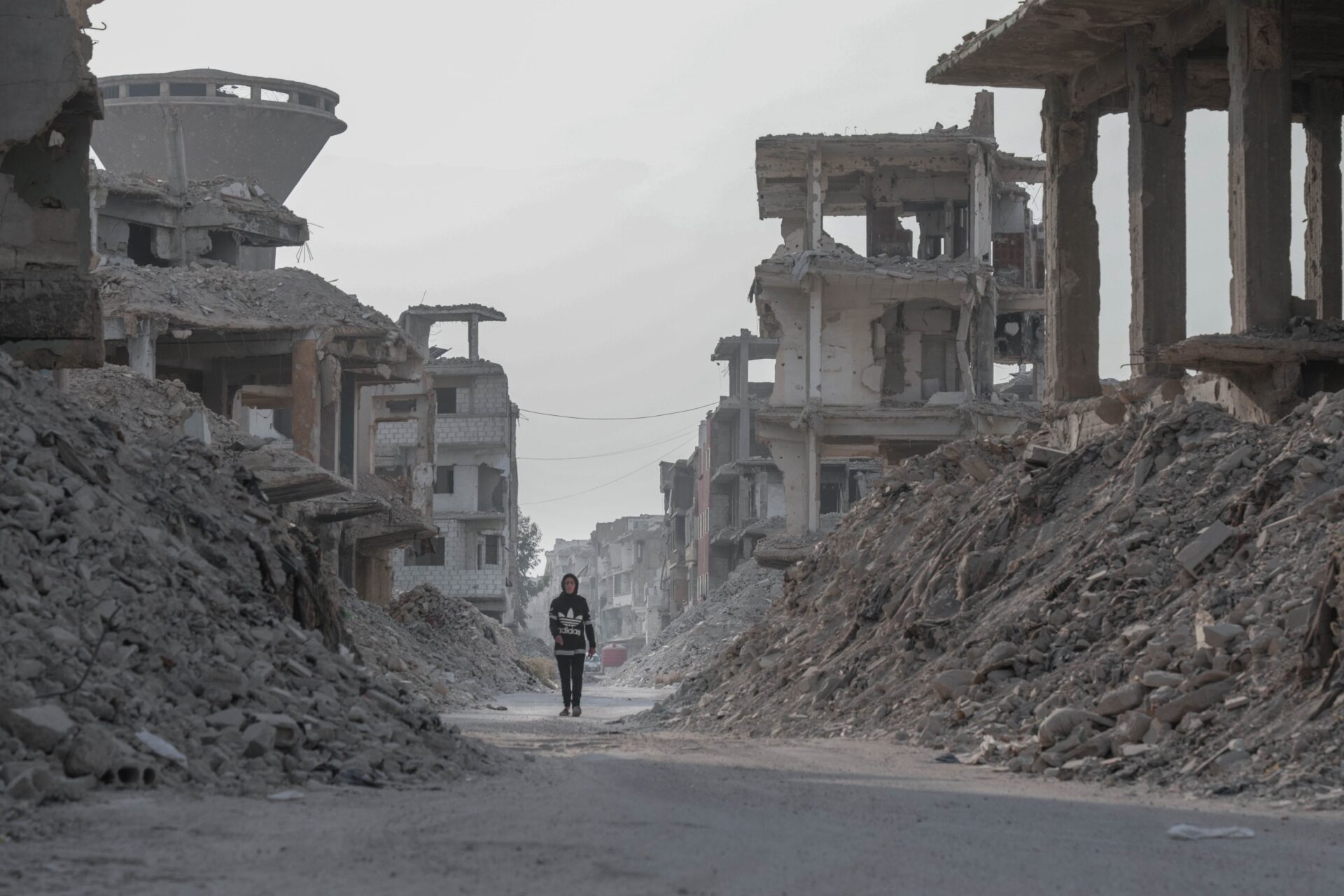
Image Credit: Baraa Obied (Pexels)