Global indicators show that women in the Arab States of the Gulf have made significant advances in education and public sector leadership through legal reforms, quotas, and professional development initiatives. But they remain underrepresented on corporate boards with a recent 2025 report showing women hold only about one in every 15 board seats across the region’s 729 listed companies. Addressing this disparity requires shifting attention from board appointments to the leadership pipeline that prepares women for taking a seat at the highest level of business governance.
Women typically reach board positions through two pathways: the traditional executive route (as chief executive officers) or influential professional and community leadership. Together, these pathways form the pipeline of potential board candidates. Weaknesses in either pathway reduce the pool of women with the skills, experience and readiness for board appointments.
A striking feature of Gulf boardroom pipelines is the disconnect between women’s progress on key gender-equality indicators and their continued underrepresentation on corporate boards. Women in the Gulf outperform men in tertiary education, they participate in the labour force at relatively high rates, are well represented in professional and technical occupations, and in the UAE hold 50% of seats in the Federal National Council and 20% of ministerial positions. Yet these gains haven’t translated into comparable representation in senior executive or board-level roles.
Although political leadership is not itself a pathway to corporate boards, comparative evidence from Western countries suggests that women’s representation in political and corporate leadership tends to progress in tandem. The UAE departs from this pattern.
The sectoral distribution of women directors across GCC-listed companies further highlights weaknesses in the leadership pipeline to corporate boards. Female representation remains below 11% across healthcare, Energy, Financial Services and Information Technology and below 5% in Consumer Staples, Real Estate and Materials, and suggest that women’s board participation remains constrained across industries, albeit to varying degrees.
Healthcare and financial services perform relatively better, reflecting women’s stronger participation in professions traditionally associated with these sectors. By contrast, industrial, utilities, materials, and real estate continue to exhibit particularly low female board representation, consistent with longstanding occupational segregation. Notably, even the UAE’s largest listed sector, financial services, has fewer than 10% women directors, indicating that workforce participation alone is insufficient without improvements in executive succession, sponsorship, and board appointment processes.
The pipeline for alternative pathways to the boardroom based on specialised expertise or influential professional and community leadership are similarly constrained by gatekeeping practices, limited visibility and opaque appointment processes.
Extensive research has documented the influence of formal rules, informal norms and cultural-cognitive structures in shaping organisational behaviour and outcomes. Within this institutional context, women’s career progression is often constrained by deeply embedded socio-cultural and organisational barriers. Persistent gender bias, male-dominated informal networks, and institutionalised inequalities continue to reinforce structural barriers to leadership, limiting women’s access to senior management and board positions. These barriers are reinforced through a range of mechanism; institutional gatekeeping, policy limitations, exclusionary recruitment practices, implicit gender bias, societal role expectations, limited visibility of women leaders, and organisational practices that restrict career progression; all of which sustain a cycle of exclusion.
These institutionalised practices disproportionately disadvantage women, reinforcing arguments that gendered institutional arrangements systematically marginalise women and constrain their access to positions of organisational power. Added to this, research on role congruity suggests societal expectations associated with gender often conflict with prevailing conceptions of leadership. This creates persistent barriers to women’s advancement and acceptance in leadership roles. Understanding these barriers underscores how meaningful progress depends on fostering organisational cultures that value, legitimise and actively leverage women’s expertise. And addressing this barriers, would ultimately likely expand the pipeline of women ready for corporate board positions.
These changes are possible as institutions are not static. They can be reshaped through policy reforms and leadership advocacy. Structural interventions, such as enforceable board quotas, can challenge entrenched norms and signal a commitment to gender equity, as demonstrated by Norway’s experience with mandatory board quotas. However, quotas alone are unlikely to produce lasting change because they leave underlying cultural and structural barriers intact. Effective policy frameworks could combine representation with capability development. International evidence indicates that quotas are most successful when supported by leadership development, board readiness programs, mentoring and professional networks. The UAE has already taken important steps through initiatives such as the Gender Balance Council, but need to be complemented by strategies addressing the distinct challenges faced by women.
Mentoring is another important mechanism strengthening the pipeline. Structured programmes linking aspiring women directors with experienced board members can build leadership capability, expand professional networks and improve board readiness.
Additionally, while quotas improve representation, they do not address organisational cultures or unconscious biases. Both of which influence board appointments with research highlighting how leadership remains associated with traditionally masculine characteristics. Addressing these biases requires organisations to complement gender diversity targets with diversity and inclusion initiatives, unconscious bias training and transparent board appointment processes; and regular evaluation of policy outcomes.
Overall, strengthening the boardroom pipeline requires an institutionally embedded approach that extends beyond increasing women’s representation. Lasting progress depends on integrating structural reforms, leadership development, mentoring, transparent board recruitment, inclusive organisational cultures and robust accountability mechanisms within a coherent policy framework. Together, these interventions can foster equitable career progression and build a more diverse, inclusive, and sustainable pipeline for woman wanting to take their seat in the corporate boardrooms across the Gulf.
Editor’s note: This article is part of a 3-part series examining how women navigate power in the Arab States of the Gulf with a specific focus on how examining the organisational and structural challenges that shape women’s experience of the corporate world in the UAE. The first article, entitled, Negotiating Patriarchal Power in the UAE, examined the cultural and historical influences shaping women’s roles in the UAE and the broader Middle East and North Africa region. It highlighted how women’s empowerment is characterised by a complex interplay between state-led reforms, patriarchal norms, and national identity. While successive government initiatives have expanded women’s educational, professional, and political opportunities, these advances continue to unfold within institutional and cultural structures that both enable and constrain women’s agency.
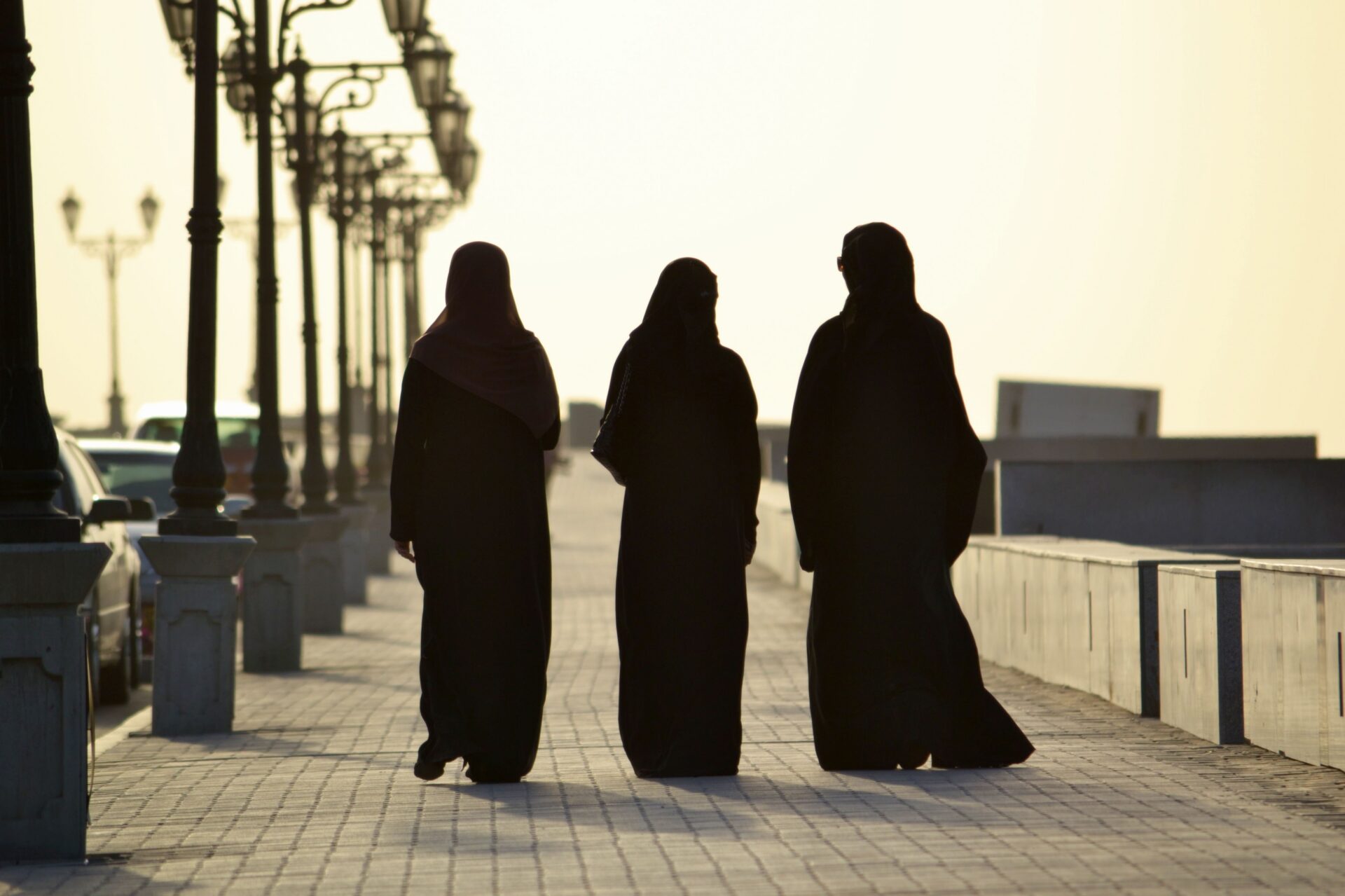
Image Credit: Irma Sjachlan (Pexels)