The Iranian nuclear program has, for more than a decade, been the subject of much concern on the international stage. The United States and its Middle Eastern allies have been adamant about stifling the Iranian nuclear program; whereas Iran has asserted its right to pursue a civilian nuclear program. With the failed peace process, and the Middle East reeling in the aftermath of the 12 Day War, the potential weaponisation of the Iranian nuclear program is more important than ever. As this article explores, Iran has continued to pursue a nuclear program as a form of strategic deterrent, amid persistent threats to its state sovereignty from the US and its allies.
In July 2015, Iran signed the Joint Comprehensive Plan of Action (JCPOA), in partnership with the five permanent members of the United Nations Security Council (UNSC) and Germany. The landmark treaty sought to defuse mounting tensions and prevent the proliferation of nuclear weapons in a region mired by protracted instability following the US-led invasion of Iraq in 2003, an ongoing proxy-war between Iran and Saudi Arabia (via their military interventions in the Syrian and Yemeni Civil Wars) and the contemporaneous military campaign against ISIS.
Broadly, the agreement subjected Iran to more rigorous nuclear site inspections by the International Atomic Agency (IAEA), restricted uranium enrichment and limited Iranian stockpiles of already enriched uranium. In return, sanctions against Iran would be gradually lifted, however, UNSC members reserved the right to impose ‘snapback’ sanctions if Iran was not compliant.
Initially, Iran was seen as being fully compliant with the agreement. However, in 2016, then Presidential candidate Donald Trump heavily criticised the deal and in 2018, once elected, unilaterally withdrew the US from the plan despite the objections of America’s allies. His cited reasons for this withdrawal included that: Firstly, the Iranian regime was contributing to regional destabilisation in order to pursue its aspirations for regional hegemony and so engaged in negotiations in bad faith. Secondly, the plan left Iran’s nuclear program intact, enabling Iran to potentially develop nuclear weapons at the treaty’s conclusion, and that harsher restrictions were needed to roll-back Iran’s nuclear research and development capabilities. Thirdly, the plan did not address Iran’s long-range missile capabilities, which presented a threat to American interests in the region. Finally, the Iranian Revolutionary Guards Corps (IRGC) was capitalising on the unfreezing of Iranian government funds to further arm Iranian regional proxies, including Hezbollah and the Houthis.
Following American’s withdrawal, Iran and its European partners attempted to salvage the deal and bypass US sanctions through the creation of an intermediary financial institution that would allow Iran-EU trade. However, such hopes were ill-founded as the US repeatedly engaged in escalatory behaviour that demonstrated its disinterest in a negotiated settlement with Iran. The assassination of the IRGC’s General Qasem Soleimani in 2020 was perceived by some observers as an act of war, and while Iran’s retaliation was restrained, it gave cause to Iran to cease abiding by uranium enrichment limits as outlined in the JCPOA. The four year presidency of Joe Biden failed to produce any meaningful agreements between Iran and the US, due to the insistence of both parties on the inclusion of provisions outside the scope of the original JCPOA (including the removal of the IRGC’s terrorist designation, or the curtailing of Iran’s ballistic missile program).
Any semblance of a new Iranian nuclear deal was effectively rendered impossible following the significant escalation of regional tensions as a consequence of Israel’s on-going assault on Gaza following the Hamas-led attacks on October 7th 2023. Iran was accused in the Israeli press of having prior knowledge of the attack despite initial reporting to the contrary. However, after the Israeli air force bombed Iranian military sites in October 2024, it was clear that a war between the two regional powers loomed. In June 2025, Israel launched its long-anticipated attack that, over 12 days, caused massive damage to both states’ infrastructure and exacted a heavy toll on its civilian population. Prime Minister Benjamin Netanyahu justified Israel’s action amid claims Iran was on the verge of developing a nuclear warhead. However, observers also noted Israel’s goals included fomenting regime change in Iran. Despite extensive damage to the above-ground structures at key sites in Iran, underground facilities were less affected with US intelligence assessments indicating Iran’s nuclear program had perhaps, at most, suffered a setback of several months, contrary to the boisterous claims of the Trump Whitehouse. In short, the war neither engendered regime change nor dismantled Iran’s nuclear program.
Historically, the most important factor slowing down Iran’s developing nuclear weapons has, firstly, been Iran’s own willingness to engage in negotiations with the US and secondly, its transparent dealings with the IAEA. The war fundamentally shattered this willingness to negotiate, with the Iranian government suspending its cooperation with the IAEA in July 2025 (even barring its Chief, Rafael Grossi, from entering the country). Iran also signalled it would no longer adhere to the provisions limiting its nuclear enrichment; an announcement that marked the official end of the JCPOA. Since then, there are signs indicating an acceleration of a new nuclear facility dubbed ‘Pickaxe Mountain’ while Iran’s 400kg stockpile of 60 percent enriched uranium remains unaccounted for; a stockpile sufficiently large enough to produce multiple warheads, should Iran choose to do so.
The 12-Day war with Israel has highlighted how Iran’s non-nuclear forms of deterrence, including its network of proxy-militias and long-range missiles, proved insufficient in preventing war being waged upon them. It has also likely almost certainly diminished Iran’s perception of the US as a reliable partner for peace, and that the only way for it to survive as a fully sovereign state is for it to possess a nuclear deterrent. Such concerns are perhaps best summarized by political scientist Vali Nasr, who in a recent interview, said that the 12-Day war had given Iran “total encouragement to go nuclear because that remains the only deterrence to protect themselves.”
In the months that followed, analysts argued that the potential for another regional war was high, with the kidnapping of Venezuelan President Nicolas Maduro in January 2026 seen by some as “giving momentum” to a second war with Iran. Such concerns came to fruition in February, when Israel and the US instigated another war with Iran and killed its Supreme Leader Ali Khamenei. Although a myriad of justifications were proffered, analysts have speculated that Israel and the US are attempting to engineer total state collapse in Iran. Subsequently, the Iranian regime’s perspective is that they are waging an existential war. The election of Iran’s new Supreme Leader, Mojtaba Khamenei, indicates that hardliners have consolidated their power within the regime, meaning that Iran will continue to prosecute this war rather than capitulating to US demands.
The war has since expanded across the Middle East, without any clear avenue for de-escalation. Considering how devastating the war has been for all parties, and the complete failure of the peace process, there appears little incentive for Iran to dismantle its nuclear program. It appears that the only way for Iran to guarantee state survival is for it to go nuclear, which could have disastrous implications for the region as a whole.
Editorial Note: This article was drafted and reviewed before the US and Israel commenced its war on Iran. The article was updated to reflect current events.
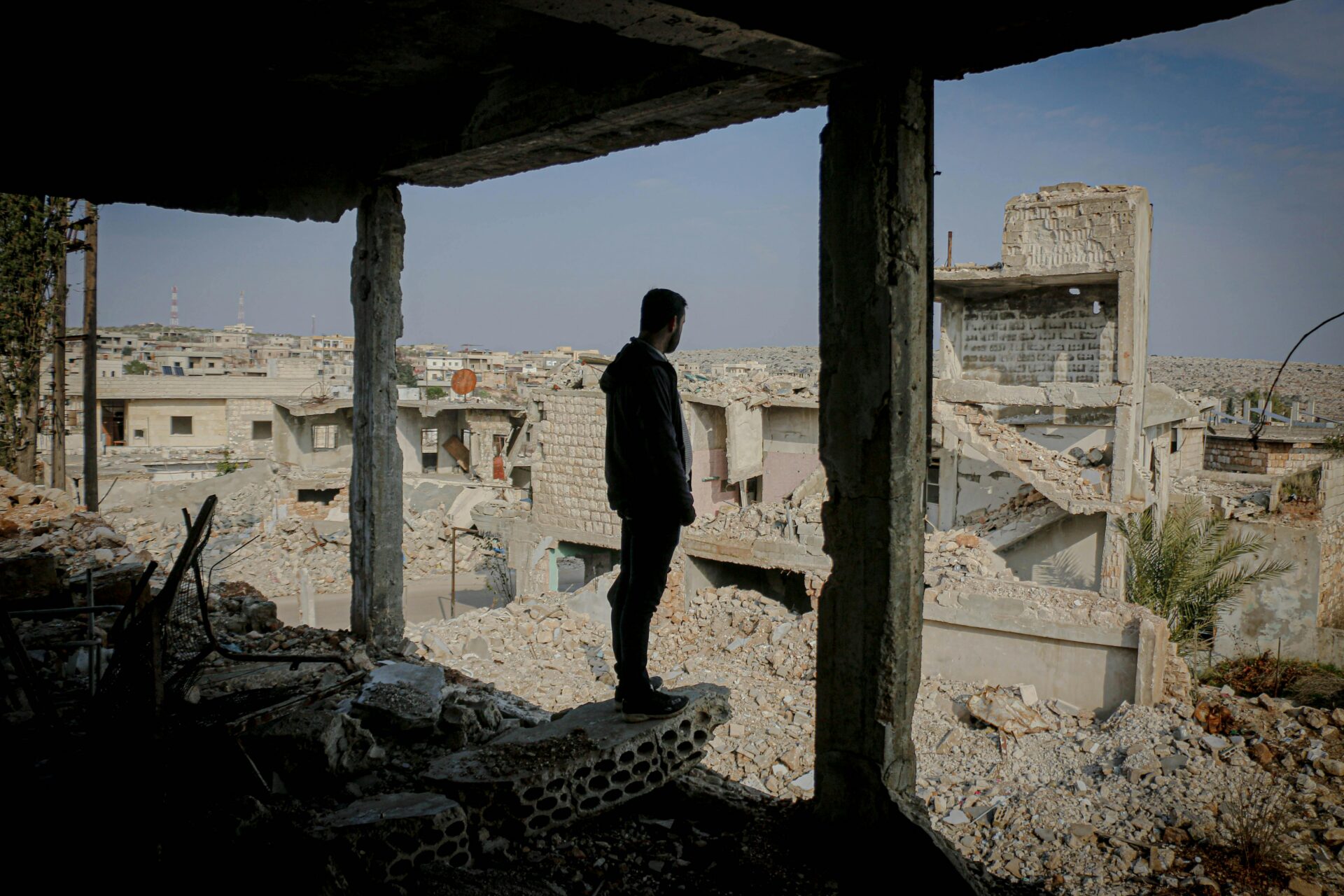
Photo Credit: Ahmed Akacha (Pexels)