Oman’s longstanding independent foreign policy and position of constructive neutrality have been challenged by the ongoing US/ Israel War on Iran. What was once a preference for strategic autonomy – that is the expansion of its international reach, gaining greater economic independence and developing a security system for the region where Gulf countries can determine their own security – is increasingly looking like a necessity.
Since the modern state of Oman was founded in 1970, the basis of its foreign policy has been characterised by a seemingly straightforward strategy of being a “friend to all”, as the Sultanate’s Ministry of Foreign Affairs calls it. However, the current war has significantly tested the sustainability and robustness of this model. After Oman tried playing the role of mediator between the US and Iran over the future of the Strait of Hormuz, US president Donald Trump threatened to “blow up” Oman were it to “get in the way of negotiations. Separately, a Trump administration official accused Omani officials of being “almost like employees of Iran”.
Rather than turn to China, Oman seems determined to pursue a different course that makes its independence more immune to the dictates of great powers, such as the US. This is not to say that Oman will abandon its traditional legacy of neutrality; as policy expert Hamed al-Ghaithi observes, “diversifying partnerships is the oldest instinct in modern Omani statecraft.” However, the current war has changed the urgency of this instinct, whereby we are seeing an evolved brand of neutrality for Oman from purely being a mediator, to an actor that more actively pursues strategic autonomy, and in particular, the Sultanate’s ability to create the necessary economic, diplomatic and regional security networks to safeguard its independence.
Oman’s evolving strategy is observable through the acceleration of diplomatic activity. Sultan Haitham bin Tariq undertook eight state visits between his succession in 2020 and 2025. But in 2026 alone, he has since embarked on six additional state visits in travelling to Botswana, Angola, Kazakhstan, the UK, China, and Brunei Darussalam. This is in addition to an official visit to France and a fraternal visit to the UAE as well as hosting a state visit for Uzbek President Shavkat Mirziyoyev in mid-November.
The number of visits is noteworthy as is their geographical spread with Oman expanding avenues for cooperation across Asia, Africa and Europe, while maintaining its long-standing ties with neighbours and traditional western partners, including the UK.
The current war is not the sole driver of this diplomatic expansion but rather reflects Muscat’s more intentional efforts to diversify its international network to redistribute the risk that pressure from any one partner could narrow its sphere of maneuverability.
Sultan Haitham’s visit to China in early November very much underpinned this strategy with the Diwan of Royal Court’s official statement describing Oman as hoping to “develop relations of friendship and cooperation towards broader and more comprehensive horizons across all fields.”
The breadth of this engagement and diversification of partnerships does not automatically translates into greater strategic autonomy, but the scale of agreements between China and Oman points towards the strategy of diversification Oman wants to pursue.
The Oman investment Authority and Omani institutions has signed 23 agreements, memoranda of understanding (MoU) and a cooperation protocol. Sultan Haitham and Chinese President Xi Jinping also separately witnessed the signing of one agreement, 14 MoUs and a cooperation protocol. The point is not that China has suddenly become a prominent partner for Oman; it was already Oman’s largest trading partner, and Oman is China’s fourth largest Arab trading partner. However, the relationship had historically been limited primarily to hydrocarbons but now has been extended to cover core areas including mining, renewable energy, logistics, space technology and artificial intelligence.
Going forward, one of the biggest challenges for Oman is whether or not it can ensure that the implementation of these wide-ranging agreements facilitates the transfer of knowledge and expertise to Omani institutions and the local workforce. There are promising signs, especially given that the recent Sino-Omani agreements also included scholarships for 30 Omani postgraduate students in China and training for 1,000 Omani specialists.
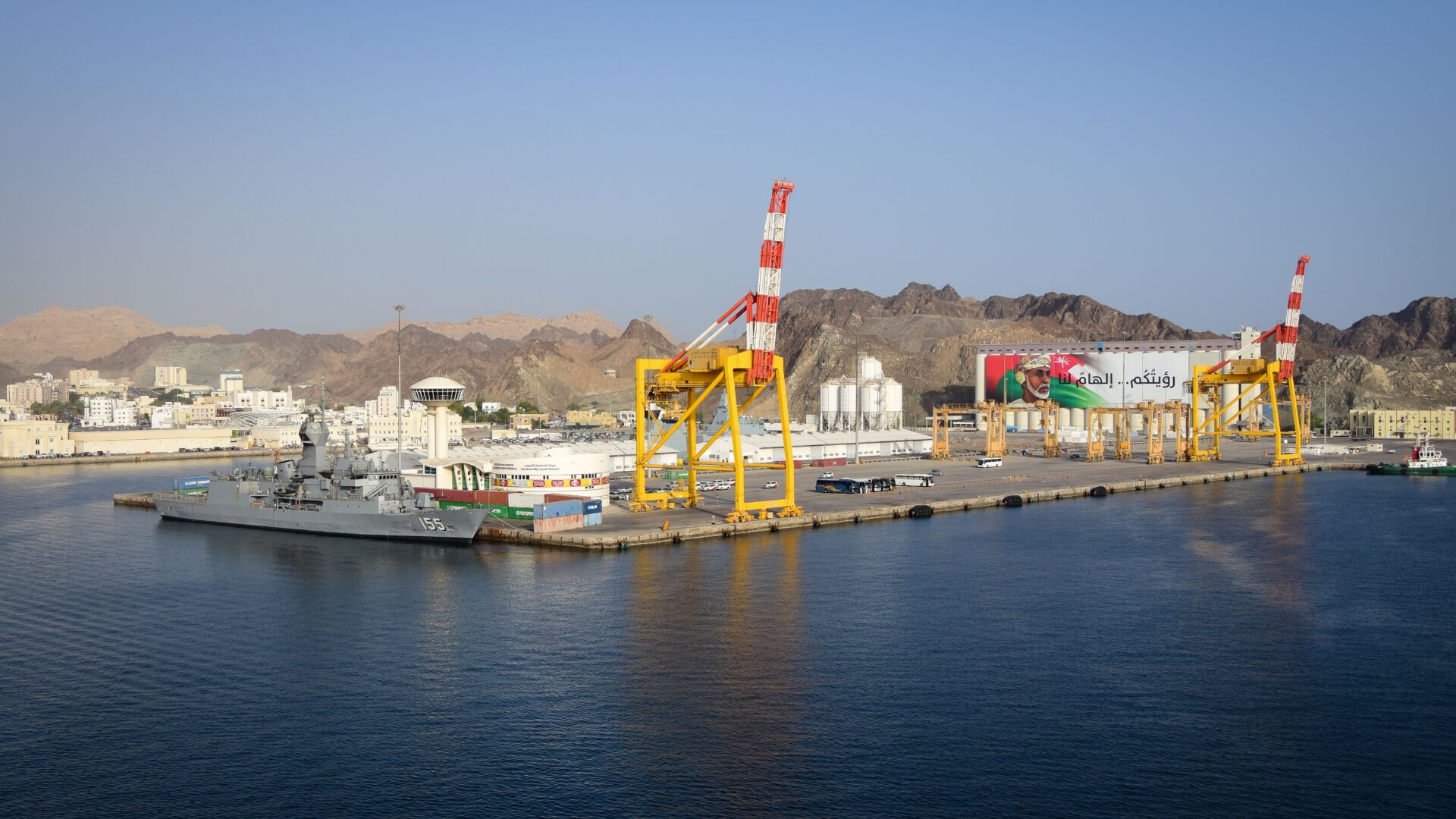
Geographically, with the Strait of Hormuz far from fully open, the Sultanate’s deep-water Arabian Sea ports in Salalah and Duqm have been positioned as alternative routes, not to replace Hormuz for Gulf energy exports, but as a viable and convenient international shipping route. Although China absorbed the global energy shock that resulted from the conflictrelatively well, 38 percent of Chinese oil consumption depends on imports from the Middle East. This makes Oman’s alternative shipping routes particularly attractive. If Oman were to continue developing these ports, it may have the dual effect of positioning itself as a logistics and industrial hub while expanding the economic value of its location outside the Strait.
The international composition of investment in Duqm illustrates this ambition and in June, Duqm’s Special Economic Zone (SEZ) announced potential investments of approximately $7.5 billion across ten agreements involving global investors, including those from South Korea, the Philippines, Germany and Egypt. The Chinese component of the SEZ’s announced investments include a $500 million battery-anode material project, but the largest disclosed project is a $4.2 billion green hydrogen project by India’s AMCE Group.
This distinction importantly shows that the Duqm SEZ investment program is far more than just a Chinese industrial enclave. Instead, it demonstrates what legal researcher Otari Kakhidze calls “a high degree of internationalisation”. Oman is attracting capital and industrial activity through diverse partnerships which, in turn may reduce its reliance on any one partner while expanding financing options and infrastructure development.
This program, as well as Oman’s recent expanded diplomatic focus, point to the Sultanate’s capitalisation of its long-standing foreign policy focus on neutrality, rather than a wholesale realignment, to enable it to pursue a broader objective of strategic autonomy.
This is the first article in a two-part series examining Oman’s foreign policy priorities in the wake of the on-going US/ Israel war on Iran. The second article will examine the alignment between Oman’s Vision 2040 and its current pursuit of strategic autonomy.