Saudi Arabia has long held aspirations of developing their own domestic nuclear program. Although progress on this front has been limited thus far, recent developments in the Middle East may potentially accelerate Saudi Arabia’s pursuit of nuclear technology. What motivates Saudi Arabia’s nuclear aspirations, and how are these aspirations nurtured or stymied by regional developments? More importantly, what capacity does Saudi Arabia have to pursue nuclear technology, and how are the United States and Israel likely to respond to such a move?
Saudi Arabia’s primary motivation for developing a nuclear program is its long-standing rivalry with Iran. The two countries have been locked in a contest for regional hegemony since the US-led invasion of Iraq in 2003 upset the local balance of power. During this period, Iran emerged as “the dominant military power in the northern Gulf…”, greatly boosting its regional influence through the patronage of proxy militias in Iraq and elsewhere. Following the outbreak of the civil wars in Yemen and Syria in the 2010s, Saudi Arabia and Iran engaged in a contentious proxy-war that exacerbated regional instability for the next decade. Although both states normalized relations in 2023 following a summit in China, Iran retained the advantage over Saudi Arabia given its nuclear and ballistic missile technology, and vast network of proxy militias. Thus, a power imbalance remained.
According to the World Nuclear Association, the Saudi Arabian government inaugurated its own domestic nuclear programme in 2010 via royal decree and has entered into numerous agreements with many atomic energy firms based in Argentina, China, France, Japan, Russia and South Korea. In April 2025, China and the GCC held their first Forum on the Peaceful Use of Nuclear Technology, during which Saudi Arabia and China signed a memorandum of cooperation “over nuclear safety and security”, where “the two countries would cooperate over technical expertise, personnel, and joint training programmes”. China has invested $11.6 billion USD in the latter’s energy infrastructure between 2005 and 2024, and has helped them survey local uranium deposits, establishing them as an important energy partner. Although Saudi Arabia has made significant progress over the past twenty years, its nuclear program remains in its infancy, and is still highly dependent on external technical support.
The United States has been noticeably absent from this discussion thus far. Without meaningful US support, Saudi Arabia is unlikely to develop its own domestic nuclear program. The US has historically been reluctant to assist Saudi Arabia with its nuclear program primarily over fears of the latter acquiring nuclear weapons. A recurring disagreement during negotiations over joint nuclear development has been Saudi unwillingness to sign a “123 Agreement”, which would require Saudi Arabia to comply with stipulations listed in Section 123 of the U.S. Atomic Energy Act of 1954, thereby curtailing their capacity to enrich Uranium domestically, essentially imposing strict non-proliferation regulations upon them. Saudi Arabia has remained adamant about establishing latent nuclear deterrent capabilities, delaying both parties from signing a comprehensive deal until very recently.
Another reason for this delay is Israel. The US has repeatedly tied a nuclear agreement to Saudi normalisation with Israel, which Saudi Arabia has conditioned upon Israeli facilitation of Palestinian statehood. Although some version of such an agreement was in negotiations as recently as 2023, the Israeli military response to Hamas’ attacks on October 7th have since rendered normalisation “impossible”. Furthermore Israel has long maintained its opposition to a Saudi Arabian nuclear program. Both the Netanyahu government, and Israeli opposition politicians have opposed the prospect of any states in the Middle East acquiring nuclear technology. Israel seeks to deny “Saudi access to advanced military technology [that] could further weaken Israel’s qualitative edge in the Middle East” and worries that “allowing the Saudis uranium enrichment… would erode the taboo on the issue and set off nuclear proliferation in the Middle East”. Thus, any potential for US-Saudi nuclear cooperation must be balanced against Israel’s strategic interests in the region.
Recent developments, however, have demonstrated that Israeli security interests run counter to Saudi interests. Since October 2023, Israel has been engaged in a genocide in Gaza, and has gone to war with several of its neighbours, with their attacks on Iran and Qatar especially raising Saudi Arabia’s security concerns. In June 2025, Israel instigated the 12 Day War with Iran, inflaming regional tensions, yet failed in their strategic objectives of degrading Iran’s nuclear program. Although it is undeniable that Iran’s infrastructure was heavily damaged by the war, the damage was not sufficient to prevent Iran from rebuilding its nuclear program. And it is for these reasons that the US and Israel have likely recently reignited hostilities with Iran. Given the existential nature of this war for the Iranian ruling class, there is a high likelihood that Iran will pursue a nuclear weapons program in order to ensure state survival. Should Iran develop nuclear weapons, it is safe to assume that Saudi Arabia will follow suit, especially when Saudi Arabia and its GCC partners now find themselves caught in the crossfire of this latest war.
Similarly, in September 2025, Israel launched a series of air strikes targeting Hamas negotiators based in Doha, after they had agreed to negotiate a ceasefire in Gaza. Qatar, like Saudi Arabia, is a long-time ally of the US and hosts their largest airbase in the region. This relationship with the United States, however, did not shield them from Israeli military aggression, calling into question America’s reliability as a security partner for all the Gulf monarchies. Therefore, the need for “enhancing indigenous military capabilities” is mounting, with Saudi security now concerned over both Iran and Israel. In the immediate aftermath of Israeli’s strikes on Qatar, Saudi Arabia and Pakistan announced that they had entered into a Mutual Defence Pact, although there remain some ambiguities whether or not Saudi Arabia was now under Pakistan’s nuclear umbrella. This pact was being negotiated long before Israel’s strikes on Qatar, however its announcement so soon after those strikes implies that this pact is to defend Saudi Arabia against Israel. This defence pact is a logical expansion of their defence ties, considering Pakistan and Saudi Arabia’s long-standing security relationship, with Saudi aid playing a crucial role in Pakistan’s first successful nuclear test in 1998. Pakistan could serve as the external partner Saudi Arabia needs to expedite its nuclear program in the coming years.
Following the Saudi-Pakistani defence pact, US President Donald Trump held a meeting with Saudi Crown Prince Mohammed Bin Salman in the White House in November 2025. Both parties finalised a broad agreement to deepen their economic and military relationship with Trump designating Saudi Arabia a “major non-NATO ally”. While the full terms of the deal have not been publicised as of the writing of this article, the two most consequential aspects of this deal are Trump’s approval of the sale of F-35 Fighter Jets to Saudi Arabia and the announcement of a “Joint Declaration on the Completion of Negotiations on Civil Nuclear Energy Cooperation”. The latter detail positions the United States as Saudi Arabia’s preferred partner for developing a civilian nuclear program and is part of a broader strategy to nurture Saudi Arabia as an alternative market for the production of Rare Earth Elements, potentially displacing China’s dominant position within global supply chains. It is unknown if Saudi Arabia will be permitted to enrich Uranium domestically, an essential technology which would allow them to produce fissile material for a nuclear weapon. President Trump still requires Congressional approval for any nuclear deal with Saudi Arabia, reintroducing the same non-proliferation safeguards which Saudi Arabia has rejected in the past.
With the outbreak of another US-Iranian war in February 2026, the GCC states now find themselves caught in the crossfire. Until recently, Saudi Arabia and its GCC partners have pursued a close relationship with the US in order to guarantee regional stability. However, this recent war has exposed the shortcomings of relying on the US for regional security. Iran has cited the presence of US military bases in the Gulf as its reason for attacking these countries, and has demanded the closure of all these bases as a precondition for the end of the current war. More importantly, the Iranian strategy of air denial has proven highly effective in striking Saudi Arabia directly, and America’s redeployment of some of its THAAD missiles from South Korea to the Middle East has likely signaled to the GCC that the US military is stretched thin. For Saudi Arabia, the need for a nuclear deterrent has only grown, as the region remains embroiled in war, and US military dominance wanes.
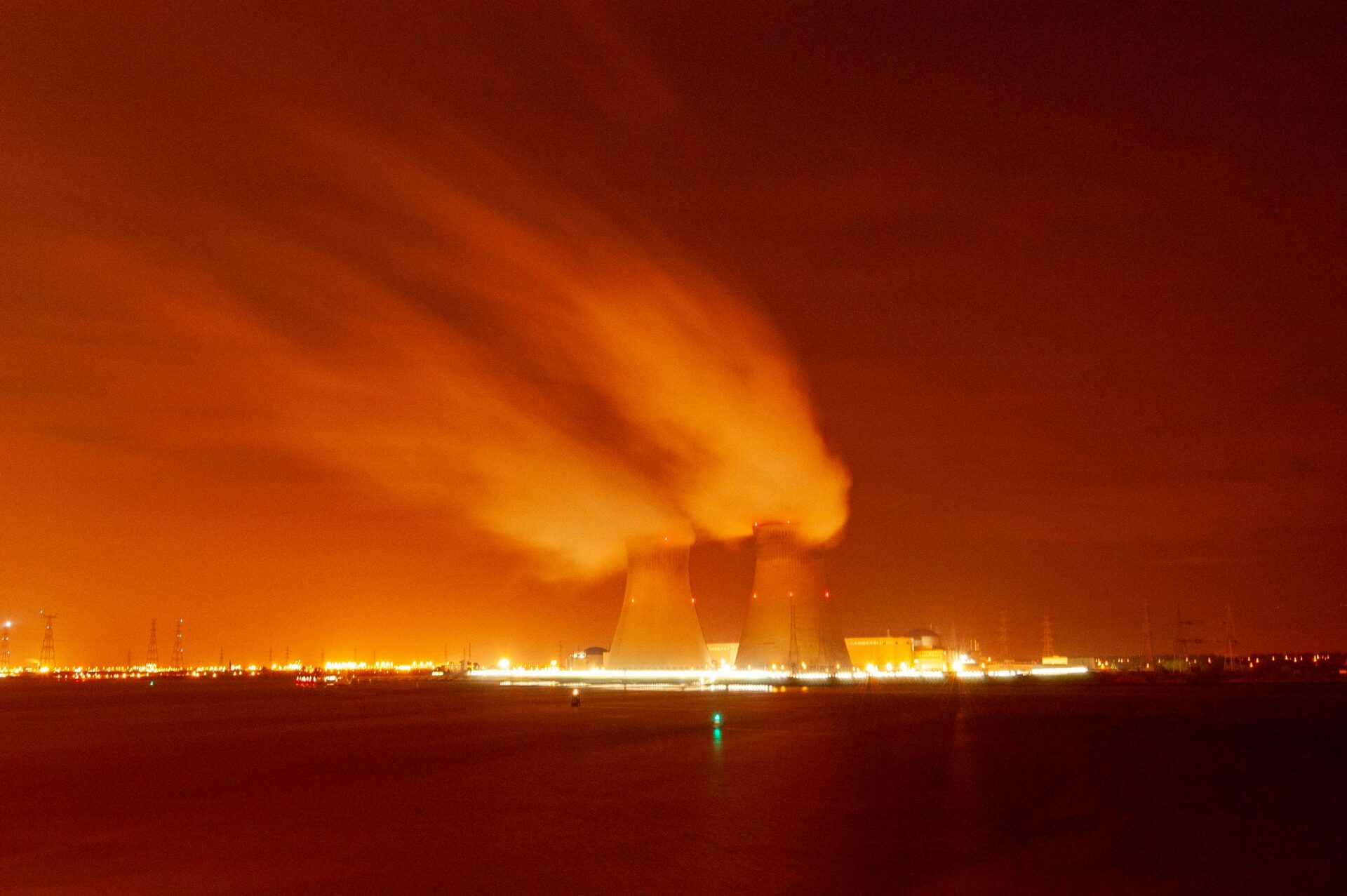
Photo Credit: Pexels – Simon R. Minshall