In September 2025, a consortium led by Saudi Arabia’s Public Investment Fund (PIF) announced a 55 billion US dollar deal to acquire Electronic Arts (EA), the largest leveraged buyout on record. The consortium agreed to pay 210 dollars a share, roughly 25 percent above the 168 dollars where EA traded before news of the talks leaked on 26 September, lifting the company’s market value from 47 to 55 billion dollars. In a competitive auction that sort of premium might reflect rival bids; here it reflects how much the buyers are prepared to pay to control EA’s reach rather than its balance sheet alone.
In 2023, EA’s games reached around 700 million players. It’s games portfolio include some of the world’s most popular games including EAFC (formerly FIFA), Madden NFL, Battlefield, The Sims and Need for Speed. The Sims has sold about 200 million copies, Need for Speed roughly 150 million and Battlefield about 57 million, while EA’s sports titles (such as EAFC and Madden NFL) draw around 150 million players each year. In a global games industry worth about 190 billion dollars in 2023, with an estimated 3.66 billion users and projections rising toward 300 to 600 billion by 2030, EA functions less as a simple games studio and more as a piece of infrastructure that connects content, data, and paying customers at scale.
In acquiring EA, the Saudi-led consortium is therefore not simply buying a familiar games company. It is combining state capital and private equity to take control of a platform that sits close to the centre of how interactive entertainment is produced, distributed, and monetised worldwide.
The logic for Riyadh sits inside a much wider economic project. Since the launch of Vision 2030 in 2016, the Saudi government has tried to reduce dependence on oil and expand non-oil sectors that can absorb a young population. Around 60 percent of citizens are under 30, and high youth unemployment has long been recognised as a risk, even though it has moved downward in recent years. In 2024, Saudi Arabia’s GDP was around 1.2 trillion US dollars, with oil and gas accounting for roughly one third of total output. Policy has therefore turned toward activities that combine exportable intellectual property, digital capability and jobs.
Gaming has been singled out as one of these anchor sectors. The National Gaming and Esports Strategy, announced in 2022, set targets of 13.3 billion dollars in GDP contribution and 39,000 jobs by 2030. Saudi Arabia already has around 23.5 million gamers and a domestic market estimated at about 1.2 billion dollars, with annual growth close to 8 percent, above the global average. From Saudi Arabia’s perspective, the EA deal is meant to provide a ready-made vehicle for deploying Saudi capital abroad, embedding Saudi-owned infrastructure in global entertainment markets, and building domestic capabilities around a high-growth industry.
PIF has spent several years assembling a broader position in global gaming. Savvy Games Group, which it owns, received nearly 38 billion dollars in 2022. Savvy acquired Scopely for 4.9 billion dollars in 2023, gaining mobile hits such as Monopoly Go, which generated about 1 billion dollars in revenue that year. In March 2025, Scopely purchased Niantic’s games division for 3.5 billion dollars, adding Pokémon GO, Pikmin Bloom and Monster Hunter Now, along with their development teams and companion apps, to its portfolio.
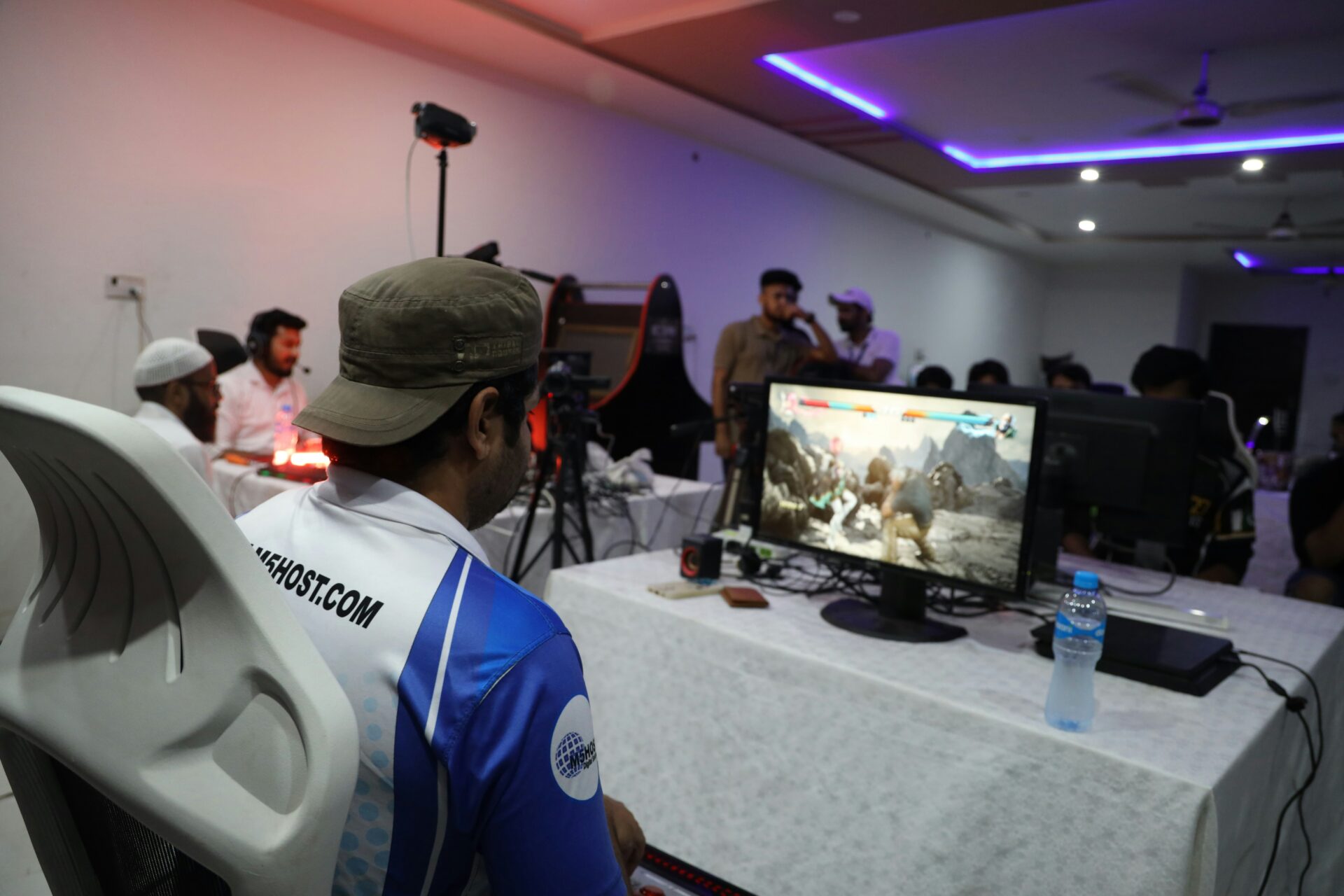
Savvy also bought ESL Gaming and FACEIT in 2022 for a combined value of about 1.5 billion dollars and merged them into the ESL FACEIT Group. ESL is a long-established esports organiser that runs major tournament circuits such as Intel Extreme Masters and ESL Pro Tour, while FACEIT operates one of the leading competitive gaming platforms. Together, ESL FACEIT Group is now one of the most influential companies in global esports, controlling key events, leagues and competitive infrastructure across multiple games.
Alongside these acquisitions, PIF has built significant minority stakes in major Japanese and US publishers, including around 7.5 percent of Nintendo and positions in Capcom, Take-Two Interactive and Nexon. Together with Savvy’s portfolio, these holdings give Saudi Arabia layered exposure to console and PC publishing, mobile gaming, esports tournament infrastructure and the development platforms that support the industry.
Within this architecture, EA is the largest single piece. It combines high-profile intellectual property, a global live-service system, and a recurrent connection to hundreds of millions of players. The 25 percent premium in the absence of rival bids shows how highly the consortium values control over this asset and signals that EA is being positioned as a cornerstone of Saudi Arabia’s wider push into the global games industry.
While PIF is the most publicised member of the consortium that bought EA, the deal rests on three partners: PIF, Silver Lake and Affinity Partners, each with a distinct role.
PIF, which controls more than 1 trillion dollars in assets, anchors the transaction. It already held a 9.9 percent stake in EA and is rolling that position into the deal. Together with Silver Lake and Affinity Partners, it forms the equity side of the consortium’s 36 billion dollar contribution, while JP Morgan Chase is providing 20 billion dollars in debt financing to reach the 55 billion dollar purchase price. PIF functions as the main financial arm of Saudi Arabia’s Vision 2030 agenda, using large-scale investments to diversify state income away from oil, build domestic industrial capacity, and secure positions in global sectors such as technology, logistics, tourism, and entertainment. Its gaming portfolio, built through Savvy Games Group and direct stakes in major publishers, is one part of this broader effort to position Saudi Arabia within the global digital economy.
Silver Lake, which manages more than 110 billion dollars, contributes a substantial portion of the equity and much of the financial and operational expertise for the buyout. Its successful partnership with Michael Dell to take Dell Inc. private in 2013 is now a standard case in discussions of private equity in technology. Since then, Silver Lake has led a series of large technology transactions in which it manages capital structure and strategic repositioning together. For PIF, this record matters because the EA acquisition is intended to deliver financial returns as well as strategic reach, and Silver Lake is the partner that makes that plausible on private equity terms.
Affinity Partners, Jared Kushner’s fund, is smaller in financial terms but important politically. It was launched in January 2021, immediately after Kushner left his role as senior adviser to President Donald Trump, and PIF committed 2 billion dollars as a major investor. In a deal that must pass scrutiny by United States regulators, an investor with direct experience of Washington and established relationships in US politics plays a specific role by helping to lower political and regulatory uncertainty around foreign control of a major US-based games company.
The deal still requires approval from the Committee on Foreign Investment in the United States. The Microsoft acquisition of gaming giant Activision Blizzard for 69 billion US dollars, agreed in January 2022 and completed in October 2023, showed how contentious large gaming transactions can become. That deal went through prolonged scrutiny in several jurisdictions, faced a legal challenge from the US Federal Trade Commission, and an initial block from the United Kingdom Competition and Markets Authority before a revised structure was accepted.
The EA acquisition combines several features that are likely to draw similar attention including significant leverage, a foreign sovereign wealth fund as the controlling investor, and a target whose products reach hundreds of millions of users. It also lands at a moment when debates over data governance, content standards, and foreign influence in digital platforms are intensifying. The outcome is uncertain, but a light-touch process is unlikely.
This sits within a broader pattern in which states shape entertainment not only through regulation but also through ownership. China has already built a major position in global gaming through Tencent, now the world’s largest games company by revenue, which operates platforms that reach hundreds of millions of players. Tencent owns Riot Games, the studio behind League of Legends, one of the most-played online games in the world, and holds a large stake in Epic Games, which runs Fortnite and the Unreal Engine that many other developers use. Through these holdings, Chinese state-linked capital sits close to the core of global games infrastructure. With EA, Saudi Arabia is moving toward a parallel position.
Sovereign investors and private equity firms now meet at the point where entertainment, data, and infrastructure converge. The EA takeover shows how a single transaction can serve at once as a financial investment, an industrial policy instrument, and a way of securing long-term influence over a global user network. For policymakers, the significance of this deal lies less in its headline price than in what it signals about the next phase of competition over who owns, and steers, the systems that organise interactive media.
The views expressed in the Near East Policy Forum are those of the authors and do not represent the views of the Near East Policy Forum or any of its partner organisations.