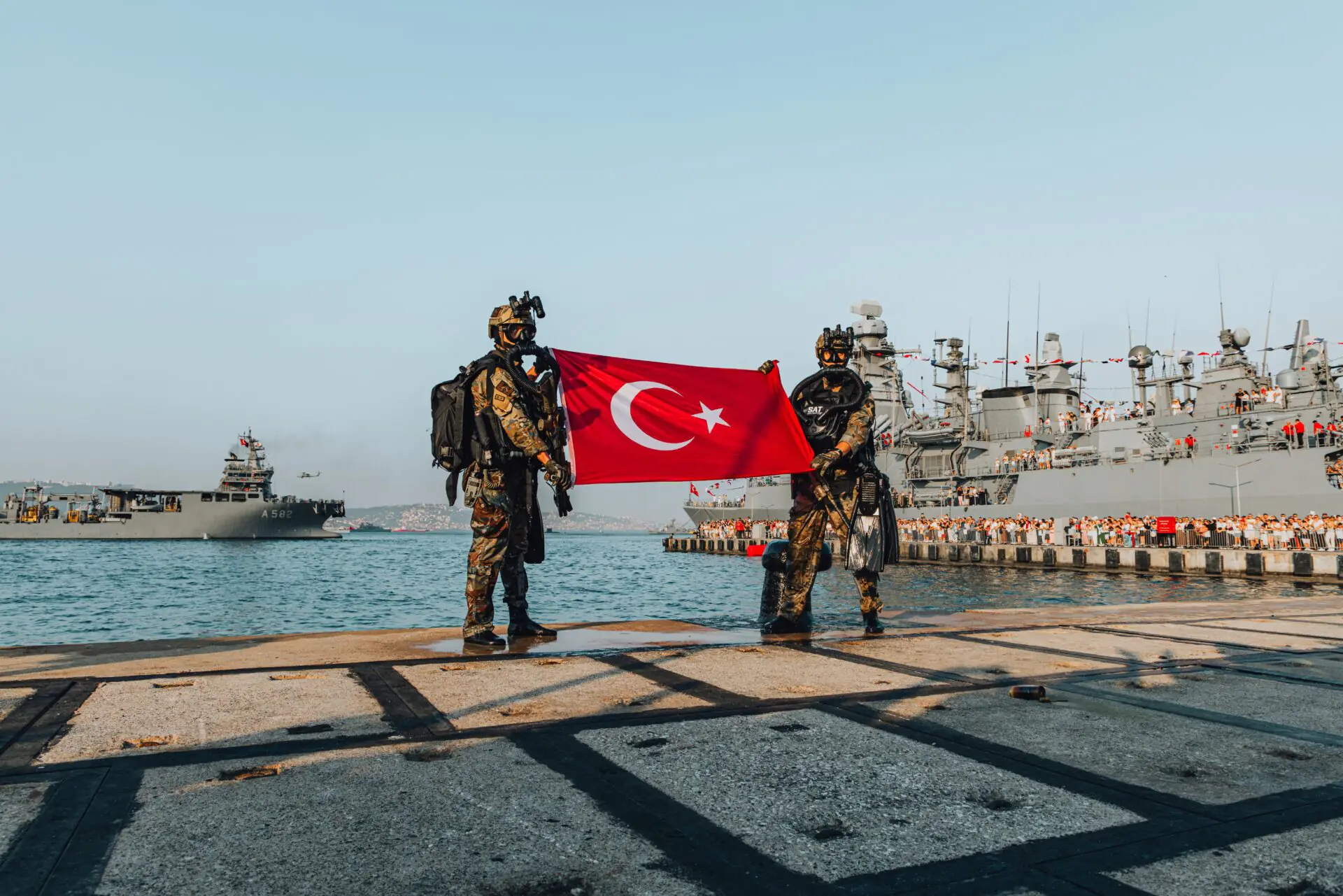
For Türkiye in particular, the Makkah pact extends Erdoğan’s established approach of positioning Ankara as indispensable across NATO, the Arab Gulf, and South Asia simultaneously. Turkish drone exports such as Riyadh’s 2023 purchase of the Baykar Akıncı system, which remains Ankara’s largest defence export contract to date, present the most obvious existing framework for the convergence of military procurement that the pact is predicted to deepen, even as divergent equipment bases (Saudi army on US and European sales, Pakistani army on mixed Western and Chinese sales, and Turkish army on NATO standards) make genuine integration a distant possibility. NATO took decades to standardise amongst members whose inventories were significantly more compatible.
Bilateral ties within the pact have been more volatile than the trilateral framing suggests. Saudi-Turkish relations became closer after the AKP was elected in 2002, peaked with a 2008 strategic cooperation agreement between Ankara and the GCC, then eroded over contradictory positions on the Arab uprisings (specifically Egypt) before deteriorating further after the 2018 Saudi murder of journalist Jamal Khashoggi in Istanbul. Ties recovered but slowly, culminating in a 2025 quadrilateral consultative framework with Egypt and Pakistan that fed directly into the Makkah agreement. Pakistan-Türkiye ties, by contrast, have been persistently close since the 1950s Northern Tier tactics that led to the Baghdad Pact.
That past helps interpret why the Arab Center’s situation assessment treats the agreement’s security issues as more problematic than the ‘NATO Article 5’ comparison suggests. Riyadh’s threat perception focuses mostly on Iran, an approach that the other two members do not fully share. Pakistan, whose Shiite minority composes roughly ten per cent of its 240 million people, has limited interest in direct conflict with Tehran, with which it shares anxieties about separatists on the Sistan-Baluchistan border. Türkiye, for its part, leveraged direct contact with the Trump administration to oppose an Israeli plan to use Iranian Kurdish forces as a weapon against Tehran’s government early in the February 2026 war on Iran. Nor do Pakistan’s and Türkiye’s chief ‘threats’ align with Saudi Arabia’s. India is the main concern of Pakistani defence architecture, whilst Türkiye’s most pressing challenges come from Greece and Israel. Saudi Arabia has neither priority in common. It maintains considerable trade with India, its second largest partner after China at roughly US$42 billion in 2025, and close relations with Greece, whose army deployed air defence systems to the Kingdom and intercepted Houthi missiles on its behalf as recently as July 2026.
The implications of the Makkah pact go well beyond the Arab Gulf and eastern Mediterranean. India has said it is following the agreement closely. Its anxiety is not about a hypothetical confrontation with Saudi or Turkish armies on the Line of Control in Kashmir, but the extent of Turkish supply and Saudi financing available to Islamabad in a prolonged hostility, a factor that will impact India’s tactics in any future conflict with Pakistan, alongside New Delhi’s ever-deepening ties with Israel and France on the opposite flank.
For Australia and the Indo Pacific, the agreement reinforces the idea that geopolitics in Asia’s western, southern, and central regions, have a critical impact on its eastern regions. By September 2026, that impact was no longer an abstract concept. War in Yemen (2015-2022) has renewed, with the Houthis seizing the highlands overlooking Bab al-Mandab. They have publicly denied any intent to target international shipping, framing the fight as directed at Riyadh, a claim America’s Trump has taken at face value saying the group “let us know that they don’t want to fight with us.” The more abrupt pressure on energy security is the separate Iraqi militia drone strike that knocked out Saudi Arabia’s East-West pipeline, the very route made to bypass Hormuz. Australia has long standing energy interests in the strait and projects itself as a supporter of Indian Ocean stability as part of its national interest, given that Gulf security directly affects energy prices, shipping insurance and commercial transit through the Strait of Hormuz, Bab al-Mandab and Red Sea. An ongoing war over a shipping zone with a significant share of global container traffic, added to Iran’s control of Hormuz, is exactly the type of situation that has historically moved shipping towards longer, more expensive routes around southern Africa. A trilateral arrangement bringing together Gulf capital, Pakistani manpower, and Turkish military technology exports, has consequences that extend well beyond the territories of signatories even without open escalation. It lies within a wider trend, alongside China’s interest in a regional order that is less dependent on the US, of pressure on domestic security architectures for which much Australian foreign policy has already accounted.
Whether the Makkah agreement matures into a long-term security arrangement or lags as political posturing will likely rely less on the durability of its NATO Article 5 framing than on two more pragmatic concerns. The first is whether Islamabad and Ankara eventually ratify it, and the second is whether either can keep refusing to activate it as both have so far done (despite escalating Houthi offensives against on Riyadh) without the agreement’s deterrent credibility eroding. On balance, the Arab Centre’s assessment argues that divergent threat perceptions, uneven capacity for military projection, and each state’s existing defence commitments closer to home make it more likely the pact settles into a political security alliance oriented towards deterrence and the avoidance of war, rather than one capable of fighting a war together. It is almost certain that either outcome will have consequences that travel, however indirectly, as far as Australia and the Asia Pacific.
This article is the second in a two-part series. The first article, entitled “The Makkah Pact: Anatomy of a New “Islamic” Security Architecture“, examines the joint defence agreement’s architecture and early tests of its integrity.
Photo Credit: Hobi Photography
Editors Note: The review process for this article commenced on 14th September 2026, prior to recent developments between Saudi Arabia and the Houthi rebels in Yemen.