After long anticipation and several decades of formative foreign policy, Crown Prince Mohammed bin Salman, Pakistani Prime Minister Shehbaz Sharif, and Turkish President Recep Tayyip Erdoğan, signed the Makkah Joint Defence Agreement, commonly rendered in English language commentary as the ‘Mecca’ pact, on the 7th of August 2026 at Al-Safa Palace in Makkah. The official joint statement frames the agreement in explicitly Islamic terms, invoking “bonds of brotherhood and Islamic solidarity” between the three states, a notably different rhetoric from the realist reading favoured by most subsequent analysis. It commits the parties to treat an armed attack on any one as an attack on all and to deepen defence cooperation, without specifying mechanisms. Turkish Foreign Minister Hakan Fidan has said the agreement was two years and eight months in the making, placing its origins in the weeks following Hamas’s October 2023 ‘Operation Al-Aqsa Flood’ and Israel’s genocidal attack on Gaza that followed. It builds on the bilateral Strategic Mutual Defence Agreement that Riyadh and Islamabad signed in September 2025, days after Israeli strikes on Doha.
A position paper by the Arab Center for Research and Policy Studies (Doha) situates the agreement in a historical frame, describing it as the first collective security arrangement spanning Arab and non-Arab states since the 1955 Baghdad Pact, which similarly linked Pakistan and Türkiye alongside Iraq, Iran and Britain. It also points to a less noted dimension that this is the first defence pact Saudi Arabia has signed outside the Gulf Cooperation Council, after decades rejecting arrangements beyond it, which is an implicit acknowledgement that the GCC framework has proved incapable of deterring threats escalating since the 2018 United States withdrawal from the Iran nuclear deal.
The full text has not been made public, leaving open questions about duration, scope, and command arrangements. Fidan has clarified that the actual “degree, form, and format” of any response will be agreed through consultation, a flexibility comparable to NATO’s ‘Article 5’. A ministerial committee and secretariat are to be based in Saudi Arabia, led initially by a Pakistani secretary general for a three-year term. Saudi officials have separately asserted the agreement does not establish “a military axis or a sectarian bloc,” rebutting the ‘Sunni NATO’ framing observed in some commentary. Despite this progress, the agreement remains unratified by the Pakistani and Turkish parliaments, which an assessment by the Middle East Council on Global Affairs identifies as a precondition for the pact functioning as more than a leaders’ agreement.
Think tank analysts have generally characterised the arrangement as a hedge rather than a bloc, in contrast to the joint statement’s own Islamic framing. All three signatories remain partners of Washington, and the ME Council’s assessment frames the pact as “assembled out of American partners, not against” the United States, a response to deteriorating trust in US security guarantees after its war on Iran and 2025 Israeli strikes on Doha, where US Central Command headquarters offered Qatar no protection. An analysis by the International Institute for Strategic Studies notes that Saudi Arabia brings capital and energy affluence, Pakistan brings manpower and nuclear capability (though no nuclear umbrella extends to Riyadh or Ankara), and Türkiye brings NATO membership and defence technology.
The three states, with Egypt, now consult informally as the “R4.” Fidan has called Cairo a natural future member, though accession could imply aligning against Iran, Israel, or India, without addressing Cairo’s anxiety about confrontation with Israel. Qatar is the likelier short-term addition.
The agreement’s most pressing test of integrity comes from Iran and Israel, followed by developments in Yemen and Iraq. Before launching its war on Iran in February 2026, Israeli Prime Minister Netanyahu threatened founding an opposing “hexagon of alliances” against an “emerging radical Sunni alliance,” and figures within Israel have named Türkiye as Israel’s next prime adversary following Iran. Tehran’s public response has been relatively restrained, accepting at face value Ankara’s denial that the pact targets Iran. The more substantial test has come from the Houthis, and within two days of the signing, Iran allied Houthis hit an Aramco refinery in Jizan. The ME Council’s assessment cautions that alliance pledges of this kind carried some structural responsibility for the outbreak of World War One and that an assurance intended to prevent war can as easily widen it, given that Turkish participation involving the Houthis or Iraqi militias would draw a NATO member directly into the hostility.
These themes imply a pact for which the language of Islamic solidarity lies uncomfortably alongside its more transactional core. The Makkah agreement is best understood not as a finished alliance but as an institution still being built in real time, its secretariat only weeks old, its parliaments yet to approve it, and its deterrent value already being probed by the same actors it was seemingly not intended to provoke. Whether that institution building outpaces the tensions testing it is likely to shape whether the pact develops into something durable or remains, as its own drafters have asserted, a framework for avoiding warfare, not engaging in it. Most telling is that the agreement is yet to present a strong challenge to powers like the US and its ally Israel that seeks to encroach on the interests of its signatories. Part Two of this series focuses on what the agreement implies for Türkiye’s balancing act, and for Australia and the wider Asia Pacific.
This is the first article in a two-part series examining the Makkah Pact. The second article, entitled After Makkah examines Türkiye’s Balancing Act and considers the implications of the security agreement for Australia and the Asia Pacific.
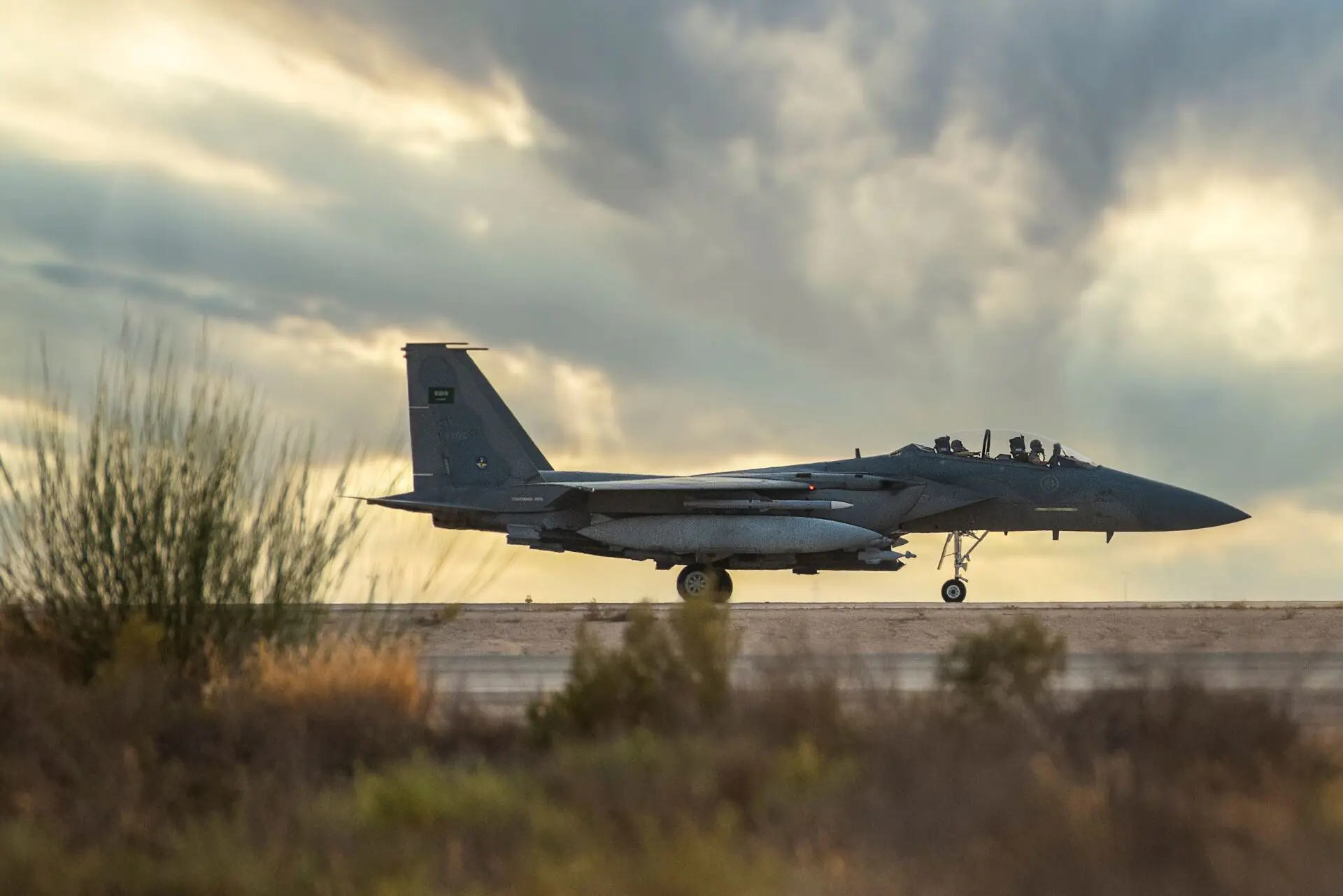
Photo Credit: Khalid Aljmman
Editors Note: The review process for this article commenced on 14th September 2026, prior to recent developments between Saudi Arabia and the Houthi rebels in Yemen.